Working garages
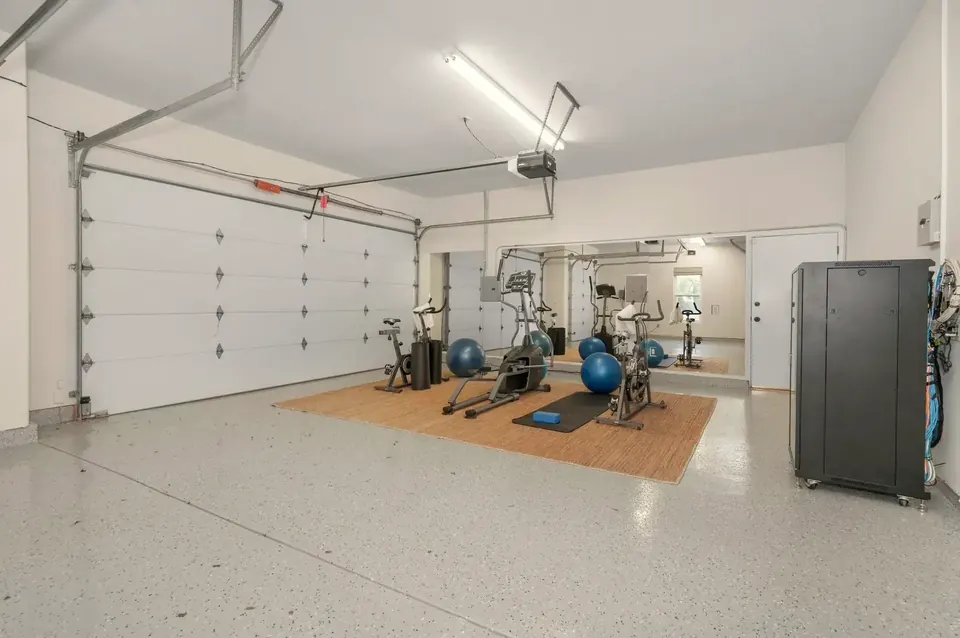
Garages where vehicles are serviced, not only parked. Jack stands, creepers, dropped sockets and the occasional fluid spill are easier on a flexible base.

Request a quote
Four quick details are enough to start. We will follow up to arrange a visit.
Or call (262) 000-0000
Polyurea floor coatings in Brookfield, WI
Polyurea grabs onto concrete, cures within the hour and keeps a little give. It is the base layer we trust under workshop floors, busy garages and anything installed in cool weather.

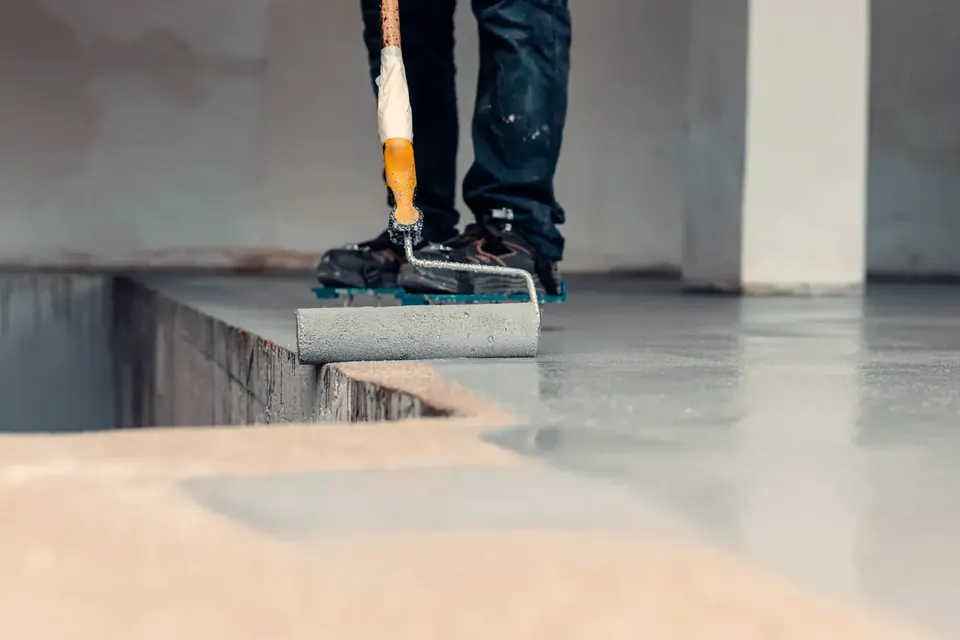
Polyurea is a two-part resin that reacts quickly and cures into a film that is strong and elastic at once. You may have come across it as the textured liner sprayed into pickup beds. The version used on floors is rolled on by hand and is formulated to stay workable for a few minutes.
On a floor, polyurea usually plays one of two roles. It is the pigmented base coat that bonds a flake or quartz system to the slab. And it is the filler we use to repair cracks, pits and joints before coating.
Its defining quality is flexibility. Most hard coatings are rigid. Polyurea can stretch and recover. Concrete is always moving a little as it heats, cools and takes on moisture, and a base coat that moves with it is less likely to crack or come loose.
One limitation is worth knowing. Standard roll-on polyurea is not stable in sunlight and will discolor if left exposed. That is why it is covered with a UV-resistant clear coat, most often polyaspartic. The two are designed to work as a pair.
Garages where vehicles are serviced, not only parked. Jack stands, creepers, dropped sockets and the occasional fluid spill are easier on a flexible base.
Woodshops, metalworking benches and hobby spaces with rolling tool chests and heavy stationary machines.
Around water heaters, softeners, furnaces and sump pits, where a durable, cleanable floor makes maintenance less of a chore.
For boats, trailers, snowmobiles and lawn equipment that come in wet and sit for months.
Floors with a network of fine, stable cracks benefit from a base that can bridge small movement.
Projects scheduled in spring or fall, when the concrete has not warmed up or has already cooled off.
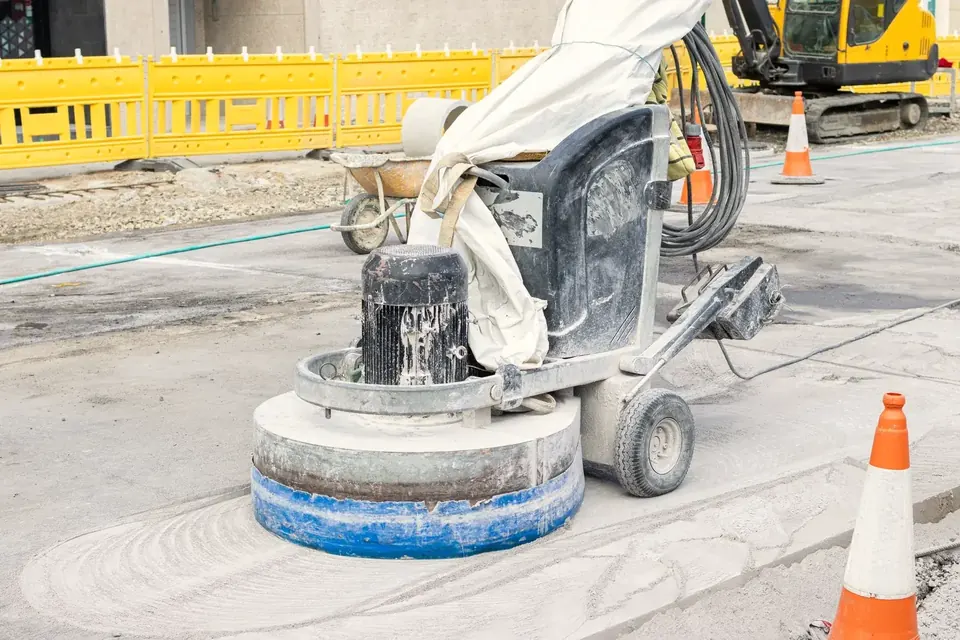
A coating is only as smooth as the surface under it, so repair is a large part of our work. Polyurea-based repair materials have changed how that is done.
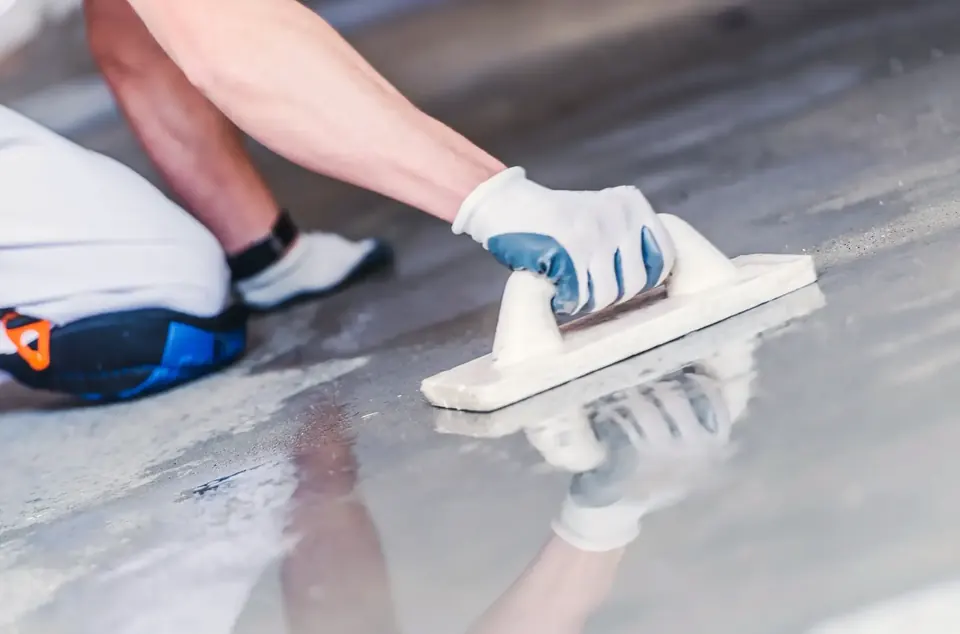
For cracks, we open the crack slightly with a diamond blade, vacuum it clean and fill it with a low-viscosity polyurea that flows to the bottom. Sand is added for wider cracks. Within ten or fifteen minutes it is hard enough to grind level.
For pits and spalls, the kind that form at a garage apron from salt, the same resin is mixed with sand into a mortar, troweled into the damaged area and ground flush.
For control joints, there is a choice. They can be filled for a seamless appearance or left open as clean lines. If a joint is still active, we use a semi-rigid filler that supports the edges while allowing movement.
Because these repairs cure so quickly, they are done on the same day as the coating. There is no waiting overnight for patches to dry.
Moisture, hardness, existing sealers and the condition of cracks and joints are all assessed.
Diamond grinding removes the dense top layer and gives the resin a profile to penetrate.
Cracks, pits and joints are filled with polyurea compounds and leveled.
Mixed in small batches and rolled out quickly, section by section.
Flake or quartz is cast into the wet base for color, texture and thickness.
A UV-stable topcoat seals the floor. A second coat is added in workshops for extra wear resistance.
Polyurea does not wait. Once mixed, a batch has a few minutes of working time, less in warm, humid weather. An installer who is not prepared ends up with material hardening in the bucket or ridges on the floor.
Our crews plan the application like a relay. One person mixes on a timer, one pours and spreads, one rolls, one broadcasts. Batches are sized to the section. Everyone knows the route and where it ends.
Accurate proportions are essential. If the two components are off-ratio, the result is a tacky or brittle patch that has to be cut out. We measure carefully and mix thoroughly every time.
And we do not skip moisture testing. Polyurea reacts with water, and vapor coming through the slab during cure can cause bubbles. If readings are borderline, we switch to a moisture-tolerant primer first.
A quick visit will tell us whether polyurea is the right base for your floor.
Unheated garages and outbuildings in this area go through a wide temperature swing every year. In January the slab may be well below freezing. In July, the section just inside an open door can be hot to the touch. The concrete expands and contracts with each cycle, and joints and cracks widen and narrow along with it.
A brittle coating laid across that movement tends to mirror it. Fine cracks appear in the finish directly above the cracks in the slab. A flexible polyurea base reduces that effect. It will not make a moving crack vanish, and we will not claim it does, but floors built on it tend to stay intact through more winters.
The quick cure matters here too. Spring and fall are popular times to get a floor done, and those are exactly the seasons when slab temperatures are marginal for epoxy. Polyurea gives us a dependable option for those months.
For garages that stay cold all winter, we also give extra thought to the door threshold, where melting and refreezing are constant. Repairs there are made with flexible mortar and the coating is sealed carefully at the edge.
In a workshop, sweep up abrasive debris such as metal filings and grit regularly, since that is what wears any finish. Wipe up solvents and fluids when they spill. Mop occasionally with a neutral cleaner. Use pads or plywood under jack stands and under the feet of heavy machines.
If the floor is going into a working shop, a few choices at the planning stage pay off later. A lighter color makes dropped fasteners and small parts easier to find. A medium flake or quartz texture keeps footing secure when sawdust or oil is on the floor. A second clear coat adds wear resistance where a stool or a rolling cabinet travels the same path every day. And if you plan to bolt down a lift, a bench or machinery, tell us where, so the layout can be worked out before the coating goes on.
What people ask when they are comparing base coats.
They are chemical cousins. Polyurea is used mostly as a base for its bond and flexibility. Polyaspartic is modified to be UV stable and a bit slower, which makes it the better clear coat. Most of our fast-cure floors use both.
No. Epoxy is harder. Polyurea is tougher, meaning it resists chipping and cracking because it can flex. Which matters more depends on how the floor is used.
Occasional sparks will not hurt it. Sustained hot slag can scorch any resin floor. A welding blanket or a steel plate under the work area is a sensible precaution.
Yes. The coating is thin relative to the slab and transfers the load to the concrete. For lift posts, we coat around the base plates or you can anchor through the finished floor.
Foot traffic is usually fine the same evening. Wheeled tool chests and machinery should wait about 24 to 48 hours.
Yes. A solid-color floor uses a pigmented base and a tinted or clear topcoat with traction additive. It is a clean look for a shop.
Sealers are ground off during preparation. If a penetrating densifier was used, a more aggressive grind is needed, and we test adhesion before proceeding.
Keep exploring
Request a quote
Tell us what happens on it: parking, wrenching, woodworking, storage. We will look at the slab and recommend a build that holds up to that use.
Rather talk it through? (262) 000-0000