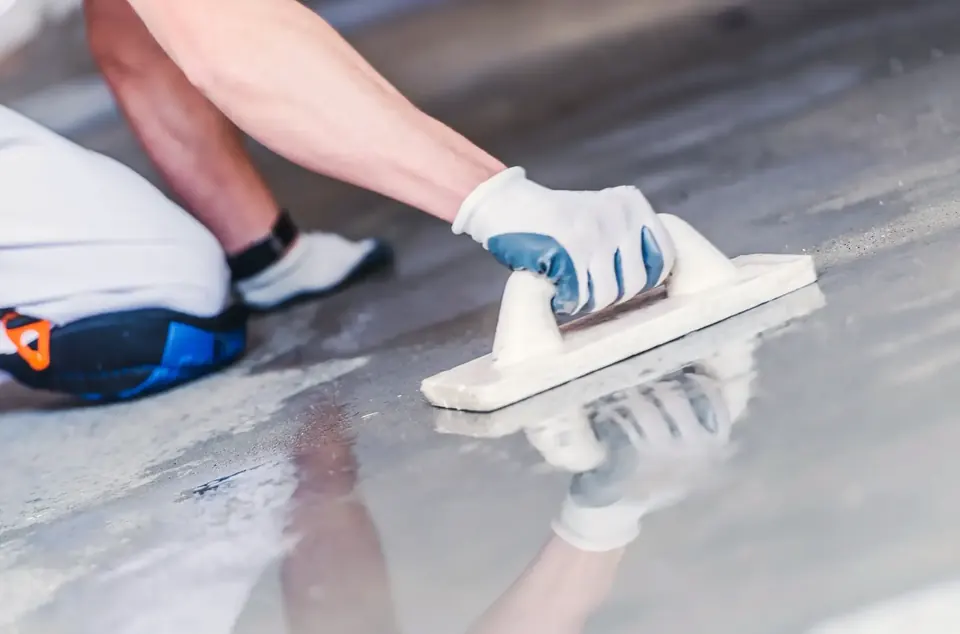
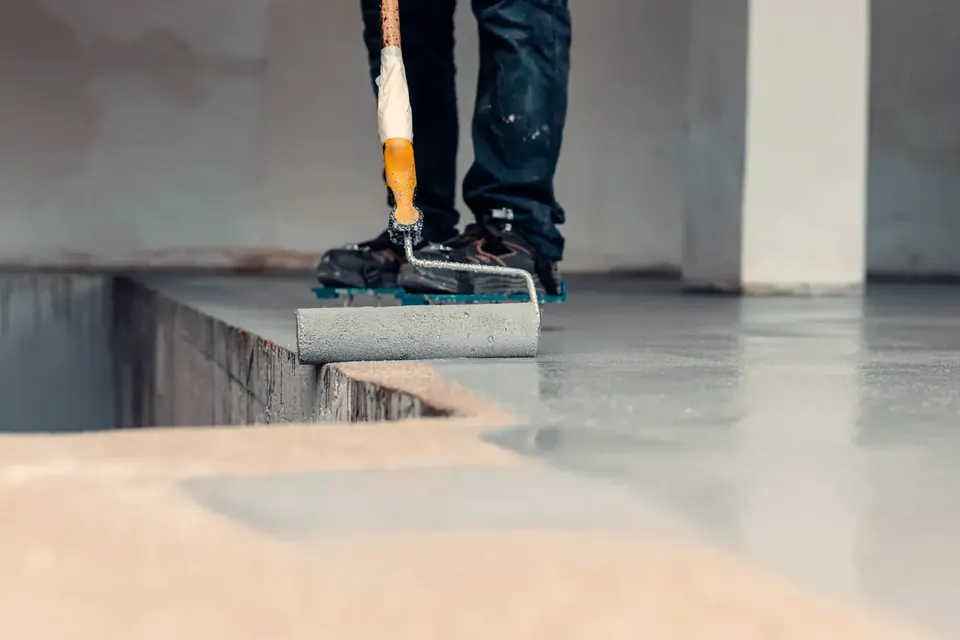
High-solids epoxy
A primer and two build coats. A dependable, economical system for warehouses and general plant floors.
Request a quote
Four quick details are enough to start. We will follow up to arrange a visit.
Or call (262) 000-0000
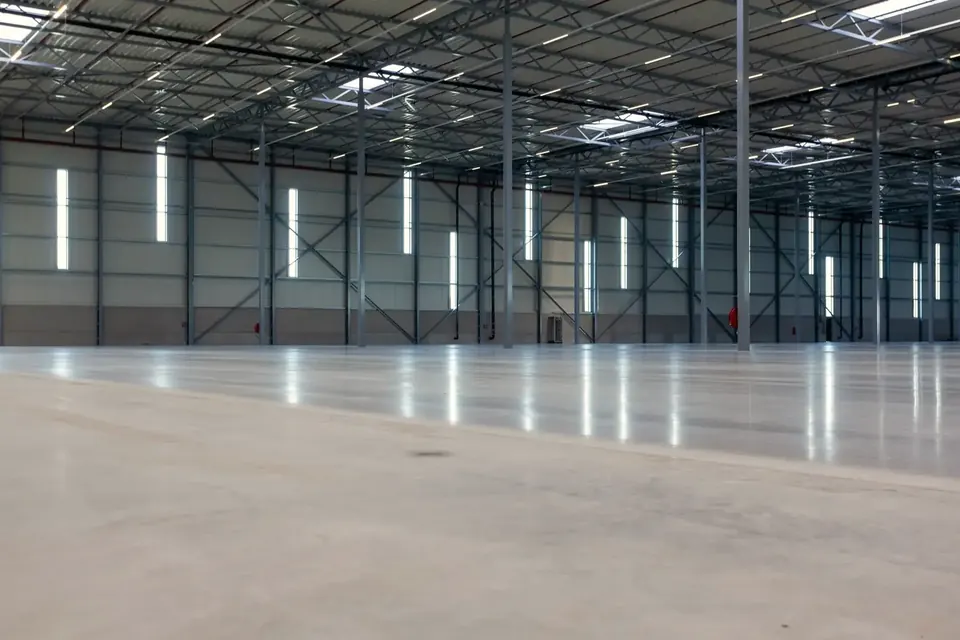
Industrial and warehouse flooring in Brookfield, WI
We turn worn, dusty concrete into a sealed, bright, marked floor that is safer to work on and simpler to maintain, and we schedule the work around your production.
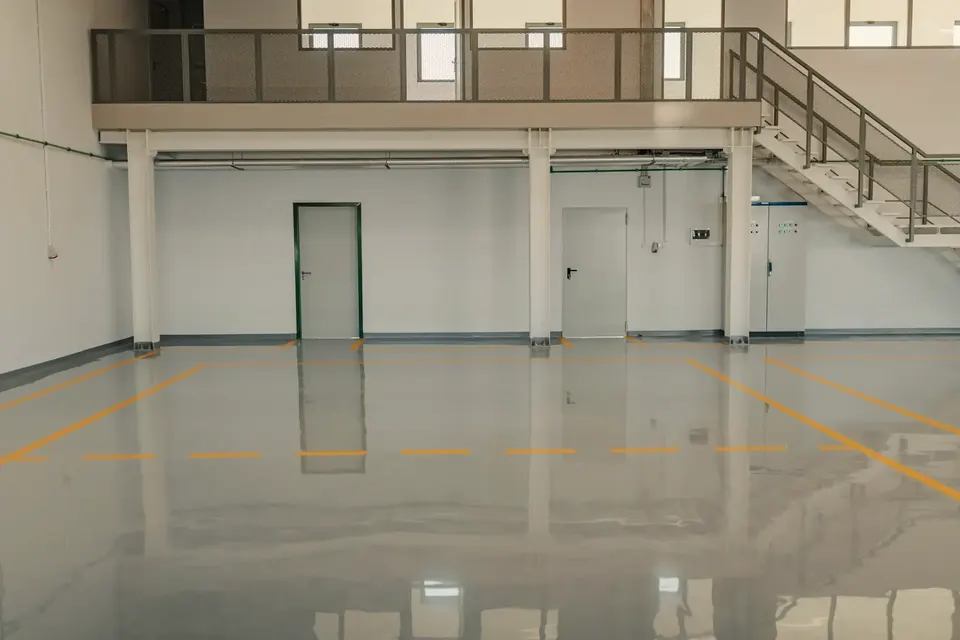
In an industrial building, the floor is in use every minute of every shift. Forklifts turn on it, pallets slide across it, fluids land on it, and everything the business owns sits on it. Yet it is often the last thing to receive any investment.
Untreated concrete wears continuously under that kind of use. The surface breaks down into dust. Joints lose their edges. Oil works its way in and makes cleaning harder each year. Visibility drops as the slab darkens.
Coating the floor is maintenance in the best sense. It seals the surface against wear and contamination, improves light levels, defines traffic routes and makes the building easier to keep clean. For facilities in Brookfield's business parks and along its industrial streets, it also makes a difference when customers, auditors or prospective employees walk through.
A primer and two build coats. A dependable, economical system for warehouses and general plant floors.
Adds superior abrasion and chemical resistance where forklifts turn or fluids are present.
Aggregate is embedded in the resin for slip resistance in wet or oily areas such as wash bays and ramps.
Polyurea and polyaspartic coatings that cure in hours, for zones that can only be out of service briefly.
Selected for the specific substances on site, from battery acid at charging stations to solvents in a paint mix room.
For large storage areas where a full coating is not required, a penetrating treatment controls dust at lower cost.
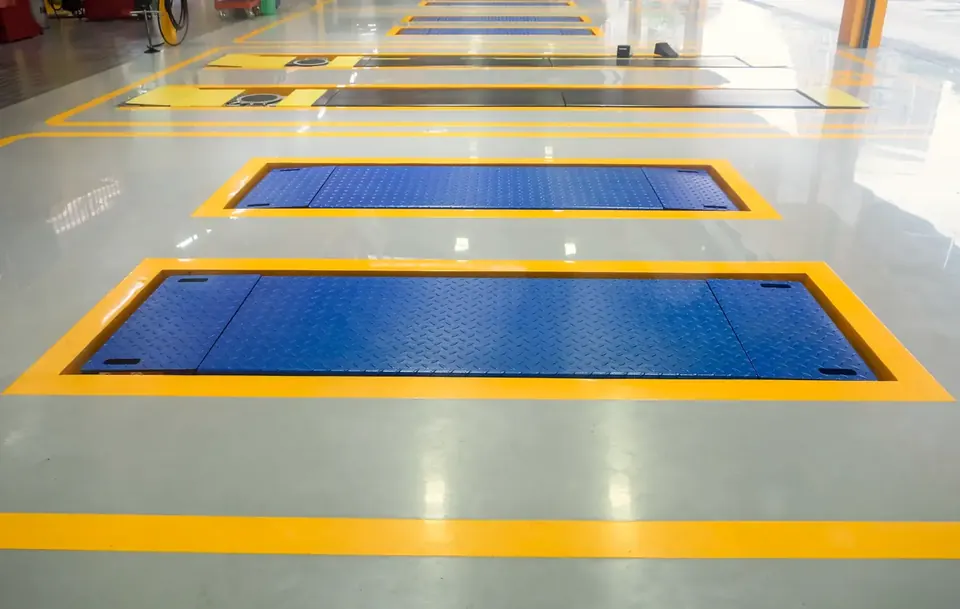
A coating project is a chance to fix more than the surface.
Traffic and safety markings. We lay out and apply aisle lines, pedestrian walkways, crosswalks, stop bars, keep-clear zones, rack and dock numbers and hazard striping. Applied in resin and sealed with a clear coat, they outlast paint and tape by a wide margin.
Joints. Damaged joints are cut back to sound concrete and rebuilt. They are then filled with a semi-rigid material that supports wheel loads and still lets the slab move.
Cracks and impact damage. Cracks are routed and filled. Gouges, anchor holes and spalls are patched with epoxy or polyurea mortar.
Slope and transitions. We feather transitions at doorways and dock plates and correct low spots that collect fluid where practical.
Handling these while the area is already shut down for coating avoids a second disruption later.
We document square footage, joints, damage and contamination, and test for moisture and bond.
Zones are set around your shifts, shipping schedule and equipment that cannot be relocated.
Shot blasting for open areas, grinding for edges and detail work, with dust collection throughout.
Oil-soaked sections are treated. Joints and damage are rebuilt.
Primer, build coats and wear coat are applied, with texture where required.
Lines and symbols are applied, the zone cures, and it is returned to service on a written schedule.
Coating a large floor well depends on equipment, coordination and judgment.
The preparation equipment is heavy and specialized. Shot blasters and large planetary grinders, paired with industrial dust collectors, are the only practical way to profile a big slab evenly.
The application is a team effort. High-solids resins have a limited working life once mixed. Covering thousands of square feet without lap marks requires several people mixing, spreading and rolling in a continuous, practiced rhythm.
The specification needs judgment. A floor that sees only pallet storage needs something very different from one that sees cutting fluid, steel wheels or hot tires. We ask for safety data sheets and descriptions of your processes so we can match the system to the exposure.
And the schedule has to hold. We plan cure times realistically and tell you the truth about when each zone can take foot traffic, pallet jacks and loaded forklifts.
A walkthrough and slab test come first. You will receive a zone plan with timing, not just a square-foot price.
Cold affects industrial floors in two ways. The first is at the dock. Open doors, snow carried in on trailers and salt tracked from the yard subject the first bays to repeated freezing and thawing. For those areas we favor tougher, more flexible systems with texture for traction.
The second is installation. Unheated or lightly heated buildings can have slab temperatures near freezing for a third of the year. Standard epoxy needs warmth to cure. If the work has to happen in winter, we plan for temporary heat or specify resins that cure in the cold.
Older facilities bring their own considerations. Many slabs were placed directly on grade with no vapor barrier and have decades of oil absorbed into them. Both conditions are workable, but only if they are tested for and addressed in the specification. We would rather find the problem at the survey than under a new coating.
Keep grit off the floor with regular sweeping, since abrasive particles under hard wheels are the main cause of wear. Scrub on a schedule with a neutral cleaner. Clean up chemical spills promptly. Inspect joints and turning areas twice a year and repair small issues before they grow. Plan on refreshing the wear coat in the heaviest lanes every few years.
Most calls from industrial facilities start with one of these.
The floor will not stay clean. Bare concrete sheds dust faster than a sweeper can collect it. Sealing the surface under a coating ends the cycle.
The joints are breaking up. Hard wheels chip unprotected joint edges a little at a time. We rebuild the edges and fill the joint so wheels roll across a flush surface.
An old coating is peeling. This usually traces back to poor preparation or moisture. The failed material is removed, the cause is identified, and the new system is specified to deal with it.
Certain areas are slippery. Oil, coolant or water on smooth concrete is a hazard. A textured broadcast in those zones restores traction.
Lines have worn away. Painted or taped markings do not last under forklift traffic. Resin markings under a clear wear coat do.
The building is dark. A light, reflective floor makes a noticeable difference to visibility without touching the lighting.
Often several of these show up together, and one well-planned project resolves them all.
Common questions from plant managers and facility owners.
With conventional epoxy, plan on roughly three to five days from preparation to forklift traffic. Rapid-cure systems can shorten that to a day or two.
Yes, with phasing and barriers. We coordinate closely with your supervisors so traffic is rerouted safely.
It depends on traffic. Light-duty storage may only need a thin-film system. Heavy forklift traffic and impact call for thicker builds or broadcast systems. We recommend based on what the floor has to carry.
Usually. We degrease, remove contaminated concrete mechanically and use oil-tolerant primers. Test patches confirm adhesion before the full installation.
For dust control in low-traffic storage, a densifier or sealer may be sufficient. For chemical exposure, cleanliness standards or heavy traffic, a coating is the better investment. We can price both.
Resin-based markings sealed under the wear coat are very durable. In the busiest turns they will eventually need renewal, which can be done without recoating the whole floor.
Yes. Many industrial projects are scheduled around planned shutdowns, holidays or off-shifts.
A coating follows the slab, so it will not level significant dips or humps. Local low spots, worn joints and damaged areas can be rebuilt before coating. If flatness is critical for racking or automated equipment, tell us at the survey so we can measure and plan for it.
Keep exploring
Request a quote
Tell us about the building and how it operates. We will survey the floor, test the slab and return a phased proposal with cure times for each zone.
Rather talk it through? (262) 000-0000